Christian living requires work, lots of sacrifice, discipline and love. It's not really easy to be poor, to be merciful, to be meek, to be peacemakers, to hunger and thirst for justice. It takes courage to be persecuted and ridiculed and mocked for being authentic Christians, for being Christ-like. It takes faith and trust in God to admit our own weaknesses and dependence upon one another rather than looking at each other's faults.
 Probably the most difficult thing about being an authentic Christian is that our love is to be all-inclusive. Almost instinctively our love tends to be exclusive. We cannot exclude anyone - not the beggar, the borrower, the adulteress, the leper, the widow, the poor, the orphan, the enemy. This is a challenge that makes us reexamine our mental attitudes, our actions, our speech, and many of the prejudices we grew up with by which we can become more sensitive to the ways that we exclude certain people from the embrace of our love. It can lead us to strip away the deep-rooted suspicions we nurture against persons who, in some way, are "different" from us.
But realistically, how many people - even those who call themselves Christian - would see their first responsibility is to care for the poor, the lowly, hungry, and the persecuted, rather than catering to those who have influence to help them and promote their own success?
In our first reading today, the prophet Zephaniah speaks of a people that God will leave as a remnant who will take refuge in the Lord and who will do no wrong. Perhaps God is not so concerned about numbers, as long as there is a handful of people who understand and follow God’s will. This small group of faithful people – this anawim – will guarantee the future survival of God’s people and will see God’s promises fulfilled. It may be that it is God’s plan to have a remnant whose purpose it is to witness to the majority, even if their witness is not accepted.
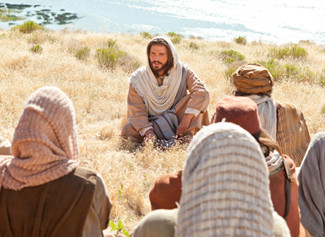
This is why the Beatitudes are so important. The Beatitudes are for living in the present tense, not just words to be memorized. We don't just keep them handy in a notebook that we can refer to occasionally. We don't just preach them to our children and to our neighbors. Jesus expects much more than that.
The Beatitudes certainly give us an upside down way to look at our lives and the world in which we live. They really don’t tell us how we ought to behave or live our lives. They are not Jesus’ own Ten Commandments. They are not commandments at all, not a code of ethics for the Christian community, not directives that will better help us follow the model behavior of Christ.
Rather, Jesus is saying that we who live the Beatitudes are already blessed. We are enabled to live as he did in a world that does not always accept him.
Jesus saw what Zephaniah saw, those “humble of the earth” who seek the Lord. These are God’s remnant who have been faithful, those who have suffered but yet have persevered in the vision of true happiness that can only come from God. Lest they forget where the gift of their witness and good works come from, Jesus makes it clear, “You are blessed.”
And with that blessing we are able to live in true happiness, the kind of happiness only God can give.