Something in our human nature leads us to think of "signs" in terms of the miraculous and the extraordinary. The Gospels, however, tell us what we should be looking for - the presence of God in our lives and in our world. Our God is never absent, never idle, always present and active. Through Jesus, God works to reveal a kingdom of justice, of peace and of love. And we are told that this kingdom can only be established through our cooperation with the experience of God. So we are always on the look-out to see signs of that kingdom, signs of God’s presence in our world.
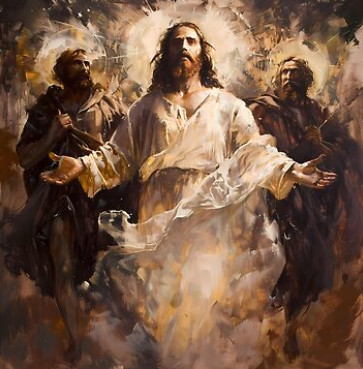
But the grace of God is everywhere. In today’s Gospel Jesus takes Peter, John, and James up onto a mountain. There they see his glory. On the mountain everything is good. Jesus is bathed in light. He speaks to Moses and Elijah, and a voice from heaven proclaims him as God’s Son. It must have been quite an experience! Talk about extradordinary signs! It is no wonder that Peter wants to set up camp and stay there. But the disciples soon learn that they cannot stay on the mountain. They must come down and return to their normal lives.
The Transfiguration story is not about a moment of spiritual illumination. The whole point of the story was not to go up the mountain and bask in God's glory, but to go back down from the mountain and do what Jesus does: heal the sick, give sight to those who are blind, open the ears of the deaf and bring the Good News to the poor. The voice from the Cloud says the same thing now as that which was heard at Jesus' baptism: "This is my beloved Son, in whom I am well pleased." But now there is an addenda, directed squarely at the disciples (and us!): Listen to him! Look at what he does. Look at the signs everywhere around you and within you.
And what are those signs? Jesus preached and lived by the simple law of the love of God and the love of neighbor. He taught us how to pray. He showed us the kingdom of God in wine and wheat, in the vineyard and the fisherman's net. He reached out to the sick, the sinner, the widow and the orphan, touching ordinary people with exquisite compassion. And he did all of this in ordinary ways.
The truth is that every aspect of our lives has a larger meaning, a mystery, a transcendence. We need to claim it. As often as we can we need to place ourselves with Jesus on the mountain because it is there that we come closest to seeing who he really is and who we really are. We are called to be people who know the transcendent dimension of our lives because it is in that dimension that we come to understand more clearly what it means to be alive. But then we must follow him down the mountain and get to work.
Good things are happening all around us. God is active in all of them. Most of these signs we do not see. In order to see them we need to come down from the mountain. So this Lent, let us look closer and let us look beyond. Let us gaze again at the image of Christ Transfigured. And let us look forward to the image of Christ Crucified, finding in that image the only sign we need to transfigure us into a newer intimacy with Him and with our brothers and sisters